Bird of the Month
Each month I will feature a bird that I have photographed. Not only will I show some of my photos but will also include information about the bird.
Short Eared Owl January 2026
The short-eared owl is a widespread grassland species in the family Strigidae. Owls belonging to genus Asio are known as the eared owls, as they have tufts of feathers resembling mammalian ears. These “ear” tufts may or may not be visible. The short-eared owl will display its tufts when in a defensive pose, although its very short tufts are usually not visible. The short-eared owl is found in open country and grasslands.
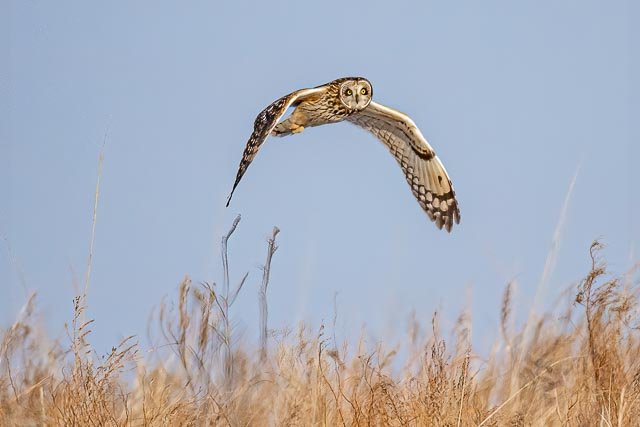
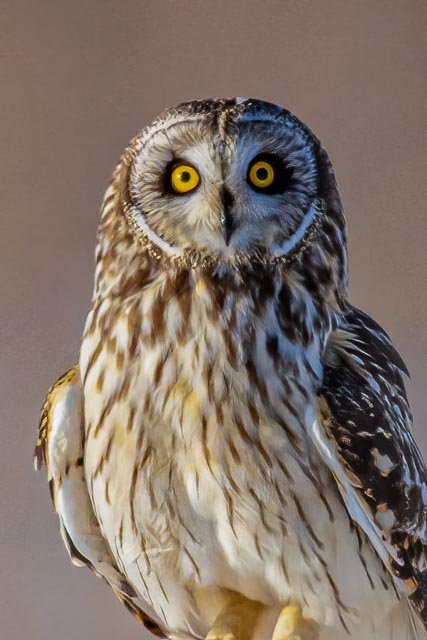
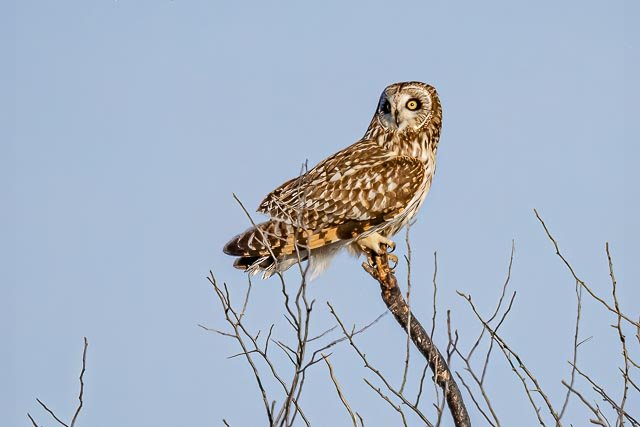
The short-eared owl is a medium-sized owl measuring 13–17 inches in length and weighing 7.3–16.8 oz. It has large eyes, a big head, a short neck, and broad wings. Its bill is short, strong, hooked and black. Its plumage is mottled tawny to brown with a barred tail and wings. The upper breast is significantly streaked. Its flight is characteristically floppy due to its irregular wingbeats. The short-eared owl may also be described as “moth or bat-like” in flight. Wingspans range from 33 to 43 inches. Females are slightly larger than males.
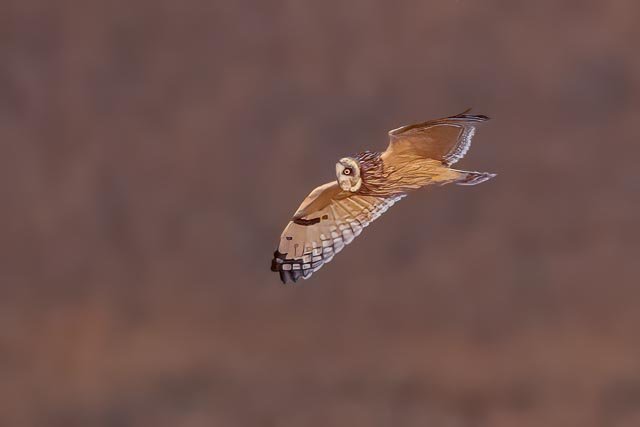
The yellow-orange eyes are exaggerated by black rings encircling each eye, giving the appearance of them wearing mascara, and large, whitish disks of plumage surrounding the eyes like a mask.
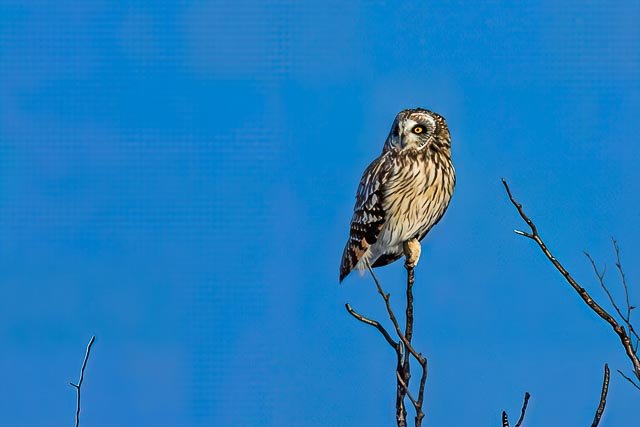
It is partially migratory, moving south in winter from the northern parts of its range. The short-eared owl is known to relocate to areas of higher rodent populations. It will also wander nomadically in search of better food supplies during years when vole populations are low.
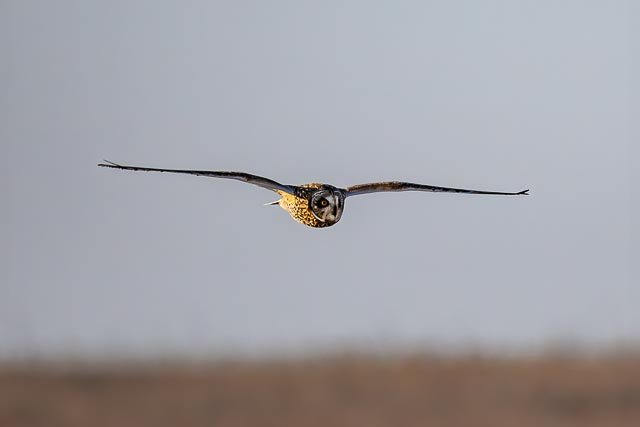
Hunting occurs mostly at night, but this owl is known to be diurnal and crepuscular as well. Its daylight hunting seems to coincide with the high-activity periods of voles, its preferred prey. It tends to fly only feet above the ground in open fields and grasslands until swooping down upon its prey feet-first. Several owls may hunt over the same open area. Its food consists mainly of rodents, especially voles, but it will eat other small mammals such as rabbits, mice, ground squirrels, shrews, rats, bats, muskrats and moles.